- 01Outside money outweighs itemized direct contributions about 12 to 1. Roughly $118 million in independent expenditures versus $10 million in direct contributions.
- 02AIPAC's United Democracy Project spent $30.6 million in the Democratic primary, the largest amount AIPAC has ever devoted to a single race.
- 03Rogers' 500 most frequent WinRed donors produced more contribution records (59,620) than El-Sayed's entire itemized file (14,370), but less money: $705,000 versus $5.6 million.
- 04Physicians gave El-Sayed 48 times what they gave Rogers: $1.24 million from 760 donors versus $25,700 from 24.
- 05The DeVos family has put $55 million into Michigan politics since 1998, funding six organizations that form the infrastructure behind Rogers' candidacy.
- 06Five Virginia and Delaware dark money groups contribute to both sides. On the Republican side, Leonard Leo's Concord Fund gave Right Vote $8 million in 2023. On the Democratic side, a Delaware 501(c)(4) linked to Arabella Advisors gave $2.9 million.
Federal campaign money in this race flows through two separate systems with different rules. Direct contributions go to the candidates themselves and are capped at $3,500 per election ($7,000 for the primary and general combined). Independent expenditures, the ads and mailers that outside groups buy on their own, flow through Super PACs, which can raise and spend unlimited amounts but are legally barred from coordinating with the campaigns they support.
Abdul El-Sayed’s campaign reports 49,689 unique digital donors with an average contribution of $49.15. His principal committee’s FEC-itemized file shows 14,370 contributions from 4,344 unique donors totaling $5.6 million; the gap is small-dollar donations that fall below the $200 threshold where the FEC starts itemizing. Physicians account for $1.24 million, the largest single occupation.
Mike Rogers’ principal committee has 96,667 contributions from 5,255 unique donors, totaling $4.6 million. His median itemized donation is $9. Five hundred donors gave 50 or more times each, generating 59,620 of those contributions and $705,000, a product of WinRed’s recurring-donation model. Retirees account for $2.28 million of his itemized total.
Between the two principal committees and roughly $118 million in filed independent expenditures, outside money outweighs itemized direct contributions about 12 to 1.
One caveat on the charts below: the FEC starts itemizing a donor once their total giving to a committee crosses $200 in a cycle. Once that threshold is crossed, every contribution from that donor appears individually, including earlier ones below $200. Rogers’ $9 monthly WinRed charges add up past $200 over time, so each $9 charge gets its own line in the FEC file. But both candidates have far more donors than the itemized file shows: Rogers’ campaign claims 28,416 donors against 5,298 unique names in the file; El-Sayed’s claims 49,689 digital donors against 4,344. The charts undercount both candidates’ grassroots bases, and neither side’s full small-dollar picture is visible in this data.
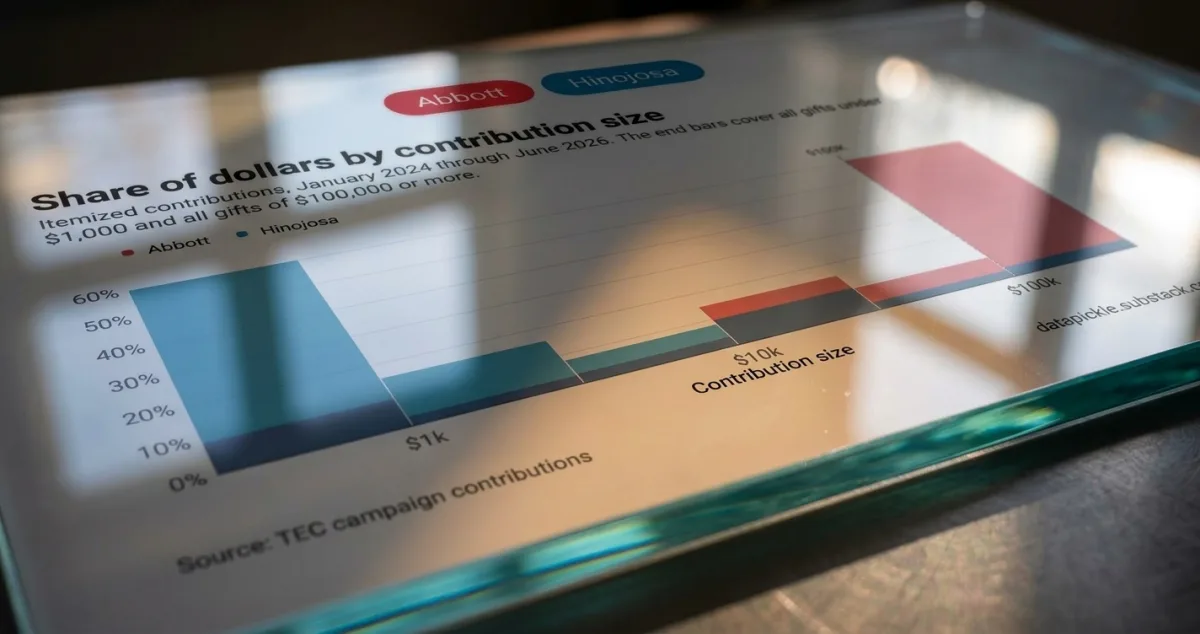
Rogers has far more individual donors, but that doesn’t tell the whole story. When you look at where the actual money comes from, Rogers’ mass of sub-$10 donations accounts for just 22 percent of his dollars, while El-Sayed’s money spreads more evenly from $200 up through $2,900.
The same data grouped into buckets. Both candidates draw about 40 percent of their itemized dollars from donations above $2,901. The difference is where the other 60 percent comes from.
Part 1: What the candidates raised
Everything in this section is money donated directly to the candidates’ own campaign committees, capped at $7,000 per donor per cycle. The uncapped money shows up in Part 2. Because this is a federal race, all direct contributions are filed with the FEC. Michigan’s Bureau of Elections tracks state and local campaigns only, so neither candidate has a state-level committee for this seat. (El-Sayed ran for governor in 2018 and Rogers served in the U.S. House, but those filings cover different races.)
El-Sayed launched his campaign on April 19, 2025, with a staff of four. He is a physician and epidemiologist who previously ran for governor in 2018, finishing second to Gretchen Whitmer with 30.3% in the Democratic primary. Bernie Sanders endorsed him within hours of his announcement.
Rogers announced his second Senate run after losing the 2024 race to Elissa Slotkin by 0.34%, the narrowest Senate margin in the country that cycle. He represented Michigan’s 8th congressional district from 2001 to 2015, chairing the House Intelligence Committee. Trump gave him a “complete and total endorsement” and ran effectively unopposed in the Republican primary.
The primary that cost $98 million
The Democratic primary on August 4, 2026, was a three-way race: El-Sayed, state Sen. Mallory McMorrow, and U.S. Rep. Haley Stevens. El-Sayed won with 48.5% of the vote.
Estimated total ad spending and reservations for the primary hit $98.2 million (per AdImpact), making it the third-most expensive Senate primary on record. Over 20 advertisers spent a combined $80.8 million in support of Democratic candidates. Nine advertisers spent $17.1 million supporting Rogers. AIPAC’s United Democracy Project alone put $30.6 million behind Stevens and against El-Sayed, the largest amount AIPAC has ever devoted to a single race.
Donation size
Both candidates get roughly 40% of their itemized dollars from donors giving $2,901 or more, but the character of those donors is different. El-Sayed’s top-bracket money comes largely from physicians and healthcare professionals. Rogers’ includes hedge fund executives, real estate moguls, and corporate PAC networks.
Rogers’ principal committee shows 96,667 contributions from 5,255 unique donors. His campaign also operates a joint fundraising committee (C00892026), which may account for the 115,721 figure the campaign has cited elsewhere. The principal committee alone averages 18.4 transactions per unique donor, the fingerprint of WinRed’s recurring-donation system, where a single sign-up generates a new $9 or $25 charge each month. His campaign claims 28,416 donors across all 83 Michigan counties with an average contribution of $28.72, and over 97% of donations under $100.
El-Sayed’s FEC-itemized file looks smaller (14,370 contributions from 4,344 unique donors) because his fundraising model runs on donations too small for the FEC to itemize. His campaign reports 61,934 digital donations from 49,689 unique digital donors, 68% of them first-time donors. In a three-week stretch in July 2026, El-Sayed reported a $3.3 million haul.
The WinRed subscription effect
Rogers’ 500 most frequent donors produced more contribution records (59,620) than El-Sayed’s entire itemized file (14,370), but less money: $705,000 versus $5.6 million. A $9 monthly charge renewed over two years generates 24 FEC line items from a single decision to donate.
The most frequent donor in Rogers’ file, Peggy Jerome, gave 787 times at an average of $13.27 per transaction. Of his 5,255 unique donors, 1,892 gave once, contributing $2.1 million. The other 3,363 gave repeatedly: 623 donors gave 21 to 50 times ($292,000), and the 500 who gave 50 or more times added $705,000 across those 59,620 transactions.
El-Sayed’s distribution runs the other direction. Of his 4,344 donors, 2,001 gave once, contributing $1.46 million. Only 7 donors gave more than 50 times, for $9,222 combined. His repeat donors concentrate in the 2-to-5 range: 1,721 donors, 4,720 contributions, $3.5 million. That tier alone accounts for 63% of his itemized dollars.
Who writes the checks
The FEC requires donors to report their occupation on every contribution.
Physicians gave El-Sayed $1.24 million from 760 unique donors across 1,785 contributions. They gave Rogers $25,700 from 24 donors. That 48-to-1 dollar ratio, and 32-to-1 donor ratio, is the sharpest occupation split in the race. El-Sayed holds an MD from Columbia and a doctorate in public health from Oxford. The physician network extends into specialties: cardiologists ($23,350), surgeons ($21,350), ophthalmologists ($19,100), neurosurgeons ($15,500). Dentists added $79,100 and pharmacists $42,300. Total healthcare professional giving: roughly $1.46 million to El-Sayed versus $32,000 to Rogers, a 46-to-1 ratio.
The employer data confirms the pattern. El-Sayed’s top employer sources include Henry Ford Health ($58,000), the University of Michigan ($36,000), Corewell Health ($31,000), and Wayne State University ($21,000).
Retirees gave Rogers $2.28 million across 85,304 contributions, making “retired” both his largest occupation category and the source of most of his high-volume recurring transactions. El-Sayed drew $213,000 from retirees.
Rogers leads among executives ($155,000 vs. $21,000 for El-Sayed), investors ($74,500), homemakers ($77,000), and lobbyists ($19,300 vs. nothing visible for El-Sayed). El-Sayed leads among attorneys ($273,000 vs. $84,000), software engineers ($40,800 vs. minimal), and professors ($58,600). CEOs split roughly evenly: $188,000 to El-Sayed, $166,000 to Rogers. Rogers’ large individual donors include Roger Penske ($7,000), KC Crain of Crain Communications ($7,000), Gerald Beeson of Citadel ($14,000), and multiple Blackstone executives ($20,500 combined). Beeson’s $14,000 illustrates how large donors signal support through WinRed: a single transaction posts to the FEC file at the full amount, then the committee reattributes and redesignates portions across elections or a spouse’s name to bring each slice under the $3,500-per-election cap. The original line item stays in the public record at $14,000, which is the point: the candidate sees the headline number even though the committee can only keep $7,000 from any one person.
Where the money comes from
El-Sayed raises more Michigan money in absolute terms, but neither candidate is primarily funded by in-state donors.
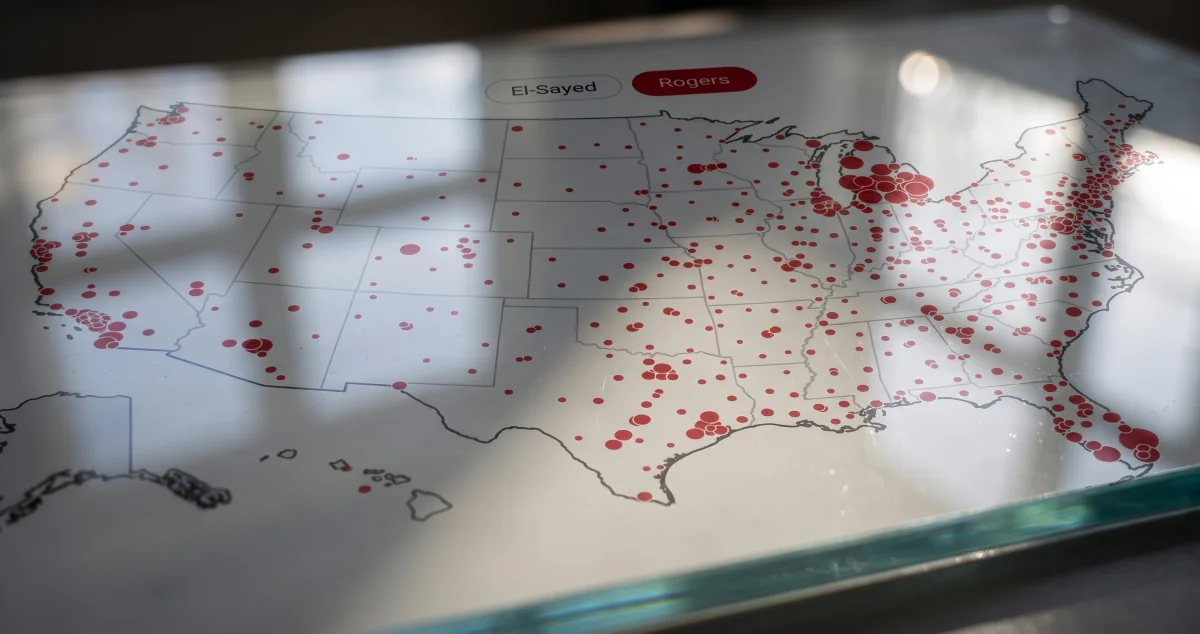
El-Sayed’s itemized donors are 36% Michigan ($2.0 million) and 64% out-of-state. His largest out-of-state source is California at $1.22 million, followed by New York ($366,000), Illinois ($306,000), Texas ($254,000), and Virginia ($203,000). On the ActBlue platform, where most small-dollar donations flow, 72% of his donations in Q2 2026 came from outside Michigan.
Rogers’ itemized donors are 29% Michigan ($1.34 million) and 71% out-of-state. His top out-of-state sources are Florida ($457,000), California ($439,000), Texas ($321,000), Virginia ($236,000), and New York ($220,000).
El-Sayed raises more Michigan money in absolute terms ($2.0 million vs. $1.34 million) and as a share of his total (36% vs. 29%). His top Michigan cities are Ann Arbor ($271,000), Bloomfield Hills ($244,000), Canton ($119,000), and Northville ($113,000). New York ($150,000) ranks third overall when you include out-of-state cities.
The out-of-state share on both sides is a function of the race’s national profile: Michigan is the only open Democratic-held Senate seat in a state Trump carried in 2024.
Monthly trajectory
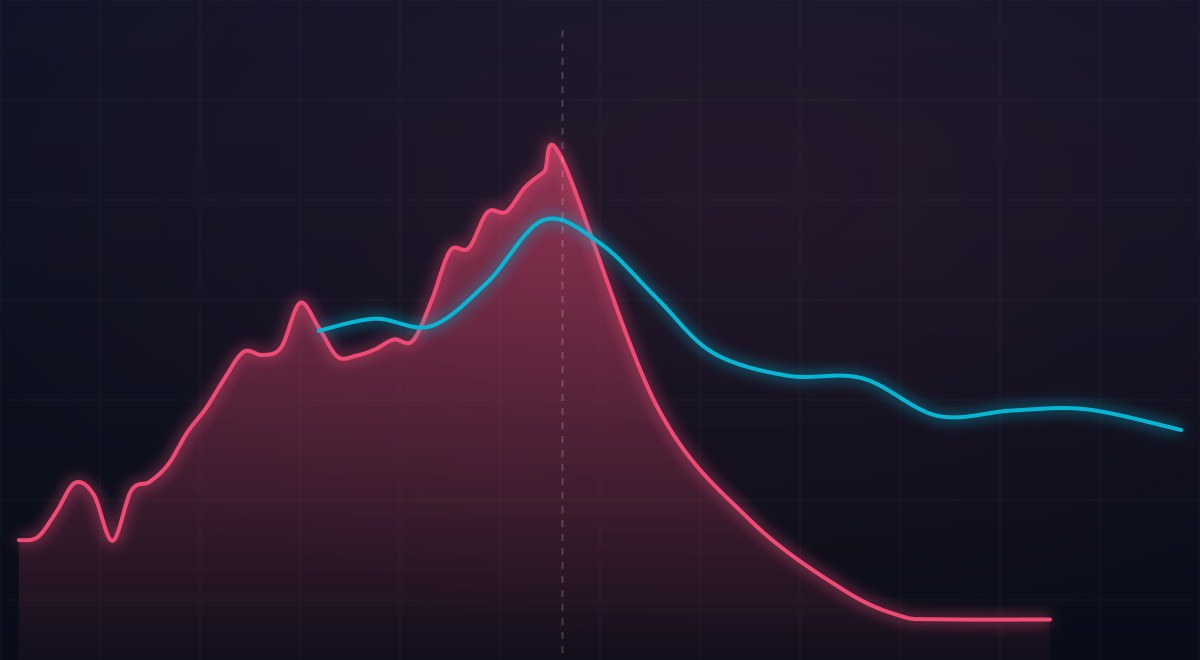
El-Sayed launched in April 2025 at $402,000 from 357 donors and scaled quickly: $743,000 in June, $948,000 in September, and a peak of $1.02 million in March 2026 from 1,647 donors. The FEC bulk download, which this analysis draws from, includes El-Sayed’s itemized data only through March 31, 2026. His Q2 report ($4.5 million raised, his biggest quarter) was filed on time in July, but the itemized records have not yet been processed into the bulk file.
Rogers started slower, at $6,000 from 226 donors in January 2025. His monthly totals climbed steadily through the primary: $209,000 in June 2025, $378,000 in September, $457,000 in December, and a peak of $585,000 in June 2026 from 2,093 donors. His donor count grew each month even as El-Sayed’s peaked earlier at higher dollar figures.
Totals
El-Sayed has raised approximately $14.5 million across all sources, per OpenSecrets. Rogers has raised approximately $10.9 million. The FEC only itemizes contributions above $200 in aggregate per cycle, so El-Sayed’s actual donor count is higher than the 4,344 unique names in the itemized file: his campaign has reported 49,689 unique digital donors.
Rogers’ total includes money raised through his joint fundraising committee (C00892026) and his principal campaign committee. His campaign reported its strongest quarter in Q2 2026 at nearly $3.2 million.
Part 2: The outside money
Everything in this section is money the candidates cannot legally direct: Super PAC spending, and the donors behind it. Three kinds of figures appear below. “Filed” means an independent expenditure reported to the FEC on Schedule E, the only number that reflects money actually spent and publicly documented. “Committed” means a group has announced a spending plan but has not yet filed the corresponding FEC reports. “Estimated” means a third-party tracker like AdImpact counted ad buys and reservations beyond what has been filed.
The primary’s outside money
AIPAC’s United Democracy Project filed $30.6 million in independent expenditures in this race during the primary, $20.1 million opposing El-Sayed and $10.5 million supporting Stevens. AdImpact’s estimate of AIPAC-affiliated spending, which includes advertising buys and reservations beyond what has been filed with the FEC, lands at the same $30.6 million. That makes it the largest amount AIPAC has ever devoted to a single race.
Two other groups added to the pro-Stevens spending. A Stronger Michigan, a Super PAC funded almost entirely by Center Forward, a 501(c)(4) that does not disclose its donors, spent $17.2 million for Stevens, all during the primary. The Center for Democratic Priorities, a dark money nonprofit that has not disclosed any donors, spent approximately $14 million through an affiliated advertising group.
Republican outside money for the general
For the general election, Republican-aligned groups have committed (announced but not yet fully filed) at least $75 million:
The Senate Leadership Fund, aligned with Senate Majority Leader John Thune, committed $51 million ($45 million initial, plus $6 million added in August). It is the largest and earliest-ever investment in Michigan by SLF, part of a $342 million national investment for 2026 Senate races. SLF’s total national fundraising has topped $500 million, a record.
The Sentinel Action Fund committed $15 million or more for advertising, voter outreach, and early-vote operations. It is funded in part by the DeVos family, whose Michigan state-level political giving totals $55.2 million across 442 committees since 1998, according to Michigan Bureau of Elections records. Sentinel’s affiliated nonprofit, Right Vote, operates as a 501(c)(4), meaning its donors are not publicly disclosed.
Americans for Prosperity Action, the Koch-network group, has spent approximately $9 million supporting Rogers, including $4.8 million during the primary phase.
Elon Musk’s America PAC entered the race on August 20 and has filed $743,000 supporting Rogers and $750,000 opposing El-Sayed.
Outside groups have filed $36.5 million in independent expenditures in the race since the August 4 primary, $14 million of it from the Senate Leadership Fund.
Filed independent expenditures
Total filed independent expenditures in the Michigan Senate race (Schedule E 24- and 48-hour notices submitted to the FEC, through September 13): roughly $118 million. The breakdown by candidate:
- Opposing El-Sayed: $42.2 million
- Supporting El-Sayed: $4.9 million
- Opposing Rogers: $12.4 million
- Supporting Rogers: $23.1 million
- Supporting Stevens: $33.9 million (almost entirely primary)
- Opposing Stevens: $1.1 million
The primary consumed all of the pro-Stevens money and about half of the anti-El-Sayed money. A Stronger Michigan spent $17.2 million for Stevens, all during the primary. UDP filed $20.1 million opposing El-Sayed and $10.5 million supporting Stevens, also concentrated in the primary period.
GLCF Inc (Great Lakes Conservative Fund) has filed $9.5 million for Rogers across the cycle, $3.4 million of it since the primary, almost entirely through Smart Media Group LLC (media placement) and Numinar Inc (digital advertising). Its top donors: Tim Dunn, a Texas oil and gas megadonor ($5 million), Kenneth Griffin of Citadel ($2.5 million), and Stephen Schwarzman of Blackstone ($2 million). GLCF also received $332,000 from “Team Rogers” and spent $21 million on Rogers’ unsuccessful 2024 Senate race. AFP Action filed $5.7 million in the primary and $2.6 million in the general for Rogers, plus $1.4 million opposing El-Sayed. Sentinel filed $2.2 million in the primary and $324,000 in the general for Rogers, plus $1.3 million opposing El-Sayed. SLF PAC filed $748,000 in the primary for Rogers and $14 million opposing El-Sayed in the general, the largest outside spender in the race since the primary. No Going Back PAC filed a single $3.8 million expenditure opposing El-Sayed on September 10.
On El-Sayed’s side, Fighting for Michigan PAC, a coalition of progressive, labor, and veterans organizations, has spent $2.3 million supporting him. Its major donors include El-Sayed’s father-in-law Jukaku Tayeb ($300,000) and Mansoor Ahmed of Illinois ($250,000). National Nurses United, the largest nurses’ union in the U.S. ($490,000), the Working Families Party ($163,000), American Priorities, a pro-Palestine Super PAC founded to counter AIPAC spending in Democratic primaries ($372,000), Planned Parenthood Votes ($303,000), and Common Defense Action Fund, a progressive veterans’ organization ($290,000), have filed additional independent expenditures supporting El-Sayed.
Groups opposing Rogers have filed $12.4 million: WinSenate, a Democratic Super PAC aligned with Senate Majority PAC ($5.9 million, $4.1 million of it since the primary), EDF Action Votes, the Super PAC arm of the Environmental Defense Fund ($1.75 million), LCV Victory Fund, the League of Conservation Voters’ Super PAC ($1.5 million), Planned Parenthood Votes ($1.08 million), Giffords PAC ($1.03 million), and AFSCME Working Families Fund, the political arm of the largest public-sector employees’ union ($1 million).
The largest single outside donor identified in the race is Tim Dunn, CEO of CrowQuest Operating, a Texas oil and gas company. Dunn gave $5 million to a pro-Rogers Super PAC. The same Tim Dunn gave $885,000 to Ken Paxton’s Texas attorney general committee and has spent more than $30 million on Texas Republican politics.
The DeVos infrastructure in Michigan
The DeVos family, heirs to the Amway fortune based in Grand Rapids, are the largest political donors in Michigan history. Betsy DeVos served as U.S. Secretary of Education under Trump; her husband Dick ran for governor in 2006. The Sentinel Action Fund plugs into a state-level political infrastructure the family has built over two decades. Michigan Bureau of Elections records show the scale. Six organizations the family funds or controls:
| Organization | Total raised | DeVos share | DeVos % |
|---|---|---|---|
| Let MI Kids Learn (2022 voucher ballot) | $9.9M | $7.3M | 74% |
| Mission Michigan | $8.3M | $6.0M | 72% |
| Michigan Freedom Network | $8.1M | $4.7M | 58% |
| Michigan Families United (Super PAC) | $8.5M | $2.9M | 34% |
| Great Lakes Education Project | $4.5M | $3.1M | 68% |
| Get Michigan Working Again (Super PAC) | $6.1M | $0.5M | 8% |
Mission Michigan received $6 million from two family members (Daniel DeVos: $3.5 million, Pamella DeVos: $2.5 million) in 2025-2026 and spent $4.7 million of its $6.3 million in total spending through a single media firm, Red Eagle Media Group. Two donors provided 95% of its revenue, and 75% of its spending went to one firm.
Michigan Freedom Network has operated as a year-round voter contact operation since 2016, spending $4.2 million since 2024, almost entirely through Arena Mail & Digital on mailings and digital ads. The DeVos share of its funding has declined over time: 89% in 2016, 100% in 2018, 84% in 2020, 78% in 2022, 69% in 2023, 61% in 2024, 45% in 2026. The organization has diversified its donor base, but the DeVos family remains the anchor.
Individual family members ranked by total state-level giving in Michigan since 1998: Daniel DeVos ($7.2 million across 203 committees), Dick DeVos ($5.1 million across 58 committees), Betsy DeVos ($5.0 million across 94 committees), Maria DeVos ($4.3 million across 236 committees), and Richard DeVos Sr. ($3.7 million across 16 committees). Since 2024 alone, the family has given $10.9 million, with Mission Michigan ($6 million), Michigan Freedom Network ($2.8 million), and state party committees making up the bulk.
Dark money
The Center for Democratic Priorities registered in Delaware in October 2025 and has filed no paperwork with the FEC or IRS. It bought airtime through Waterfront Strategies, the same media-buying firm used by AIPAC’s United Democracy Project. Its listed officer, John Jones, was also treasurer of Blue Wave Action, a 2024 Michigan group funded by two AIPAC-tied committees. AIPAC denies funding the Center for Democratic Priorities. No filing has confirmed the connection, but the shared vendor and shared officer are the traceable links. The group spent approximately $14 million boosting Stevens and has not disclosed a single donor.
A Stronger Michigan, which spent $17.2 million for Stevens, received 99% of its funding from Center Forward, a 501(c)(4) run by Jefferies Murray, founder of lobbying firm 535 Group. PhRMA is a known Center Forward contributor. Center Forward’s board chair, Robert Cramer, and Murray have both lobbied for Northrop Grumman.
On the Republican side, Right Vote, Sentinel Action Fund’s affiliated 501(c)(4), is led by Heritage Action veterans Jessica Anderson, Garrett Bess, and John Backiel. Its board includes Gary Marx, president of Leonard Leo’s Concord Fund, and Catholic megadonor Sean Fieler. The Concord Fund gave Right Vote $8 million in 2023. Leo’s Rule of Law Trust added $235,000 that year. The DeVos family funds the Sentinel Action Fund (the Super PAC side); the Leo network funds Right Vote (the 501(c)(4) side). Combined, they raised $17.5 million for the 2024 cycle.
The 501(c)(4) structure shields individual donors from disclosure. But the organizational connections are traceable: AIPAC’s vendor network on the Democratic side, and the Leo and DeVos networks on the Republican side.
Two fundraising models
Michigan has not elected a Republican to the U.S. Senate since 1994. Rogers came within 0.34% of breaking that streak in 2024, and Republican outside groups have committed $75 million or more to finish the job. El-Sayed survived a $30 million AIPAC primary with a physician-donor base that gave him 48 times what it gave Rogers and a progressive small-dollar network that has reported 49,689 unique digital donors.
About $118 million in independent expenditures have been filed with the FEC in this race, roughly 12 times the $10 million in itemized contributions the two candidates reported. Both candidates draw more than 60% of their itemized money from outside Michigan, and the race is polling within a point.
Every number in this article traces to a query you can run yourself. The FEC individual contributions and independent expenditures datasets are on OpenData, along with the queries that produced every chart above.
Datasets used:
fec/individual-contributions— All itemized individual contributions to federal committees, 2008-2026 (275 million rows). Powers the donation bucket distribution, occupation crossover, geography, and donor analysis. Filtered to cycle = 2026 and committee IDs C00902668 (El-Sayed principal), C00849810 (Rogers principal), C00892026 (Rogers joint fundraising).opendata/fec-independent-expenditures— Independent expenditures for and against federal candidates, current through the previous day. Unions the FEC’s bulk file with the 24- and 48-hour notices the FEC API received in the last 45 days, then collapses the copies of each filing. Powers the cycle-wide outside spending chart and the general-election figures. Filtered to Michigan Senate candidates in the 2026 cycle.fec/independent-expenditures— The FEC’s bulk independent expenditures file, which ran 18 days behind the API on September 14. Powers the primary-period charts, whose window closed on August 4.fec/contributions-to-committees— PAC-to-PAC and individual-to-PAC contributions. Used for dark money entity tracing.fec/operating-expenditures— Disbursements by federal committees.michigan-boe/campaign-contributions— Itemized contributions reported to the Michigan Bureau of Elections, 1998-2026. Used for DeVos family state-level giving analysis and Michigan political infrastructure context.
Non-API sources:
- OpenSecrets: Michigan Senate race summary, independent expenditure analysis, Super PAC battleground analysis.
- AdImpact: $98.2M primary ad spending analysis.
- Bridge Michigan: out-of-state donor geography, Rogers banking/investor donor history.
- Michigan Advance: corporate PAC dynamics, telecom industry contributions to Rogers.
- Abdul for Senate: campaign fundraising reports.
- Rogers for Senate: Q2 2026 fundraising report.
- Michigan Public: SLF $45M commitment.
- Detroit News: SLF $6M addition, Center for Democratic Priorities dark money.
- Washington Examiner: Sentinel Action Fund / DeVos.
- Common Dreams: AIPAC 2026 spending.
- Al Jazeera: AIPAC spending against El-Sayed.
- Responsible Statecraft: Michigan Democratic primary result.
- Hoodline: America PAC enters Michigan.
- SLF press release: $342M national investment.
- Detroit Metro Times: Center for Democratic Priorities / Waterfront Strategies.
- Sludge: Center Forward / A Stronger Michigan funding, Murray / 535 Group connection.
- EXPOSEDbyCMD: Right Vote / Concord Fund / Leo network.
- Global Project Against Hate and Extremism: Right Vote / Heritage Action leadership.
- Sentinel Action Fund press release: $17.5M 2024 cycle.
- Washington Examiner: Jessica Anderson / Heritage Action departure.
- FEC: Blue Wave Action committee filings.
- Common Dreams: AIPAC 2026 record spending.
- Detroit News: Michigan’s biggest political spenders.
- Texas Monthly: Tim Dunn megadonor profile.
Calculations & transformations:
FEC individual contribution records include all itemized transactions, generally those from donors who gave more than $200 in aggregate to a committee in a cycle. Unique donors are approximated by distinct contributor name; donors who give under different name variations (e.g. “Mike” vs “Michael”) may be counted separately.
Donation buckets use transaction_amt ranges on individual contribution records, positive amounts only. Rogers’ committee shows 19,054 zero or negative transactions (redesignations and reattributions), which are excluded from the gross positive total of $4.6 million. His net total including negatives is $4.4 million.
Occupation and employer analysis uses the free-text fields reported on FEC filings. Categories can overlap: a “physician attorney” would count in both if queried separately. The occupation crossover chart queries exact matches on the occupation field.
Independent expenditure totals keep only the latest version of each filing. The FEC file carries a committee’s original 24-hour or 48-hour report and every later amendment of it as separate rows, so an unfiltered sum counts the same ad buy two to four times. Rows are matched on spender, transaction ID, amount, candidate, and support/oppose flag, keeping the highest filing number. In this race that removes $2.5 million of duplicated rows: $1.85 million of AFP Action’s June 2026 filings, $353,000 of GLCF’s, $238,000 of the Working Families Party’s, and $100,000 of Millions of Michiganians’. An amendment that changed the amount would still count twice; none in this race did.
Geography uses state. In-state percentages are computed on positive contributions only: El-Sayed Michigan = $1,991,191 / $5,598,190 = 35.6%; Rogers Michigan = $1,339,829 / $4,625,067 = 29.0%.
Rogers’ principal committee (C00849810) shows 96,667 contributions from 5,255 unique donor names, an average of 18.4 transactions per donor. The joint fundraising committee (C00892026) is excluded from the principal committee counts. The 500 donors who gave 50+ times produced 59,620 contributions ($705,066), more records than El-Sayed’s entire itemized file (14,370 contributions). El-Sayed’s unitemized volume is not in the FEC bulk file; the 61,934 digital donation figure and $49.15 average come from the campaign’s own reporting.
Limitations:
The FEC itemized file captures only contributions above the $200 aggregate threshold. El-Sayed’s campaign has cited 49,689 unique digital donors; the itemized file shows 4,344 unique names. The gap is unitemized small-dollar contributions and ActBlue processing totals.
The FEC bulk download processes each committee’s itemized records on its own schedule. El-Sayed’s data runs through March 31, 2026 (Q1); Rogers’ runs through July 15, 2026. El-Sayed’s Q2 report was filed on time and shows $4.5 million raised, but the itemized records had not been processed into the bulk file at the time of access. This lag is common: of committees with 2,000+ contributions in the 2026 cycle, cutoff dates range from April 2025 to mid-June 2026.
SLF’s $51 million commitment and Sentinel’s $15 million are announced figures. Most of that spending has not yet been filed as independent expenditures with the FEC, so the filed IE totals in this article are lower than the committed amounts reported by news organizations.
Employer and occupation fields are self-reported by donors and not verified by the FEC. Reporting quality varies: some donors leave these fields blank, and naming conventions differ.
DeVos family state-level giving totals use Michigan Bureau of Elections data filtered by contributor last name containing “DeVos.” This may include unrelated donors sharing the surname, though manual review of the top contributors confirms they are members of the DeVos family. Organization-level DeVos share percentages are computed from the same dataset, matching DeVos family contributions to specific committee legal names.
Filed independent expenditure totals ($90M) reflect amounts filed with the FEC as of the data access date. Announced commitments (SLF $51M, Sentinel $15M) exceed what has been filed; the gap is spending committed but not yet reported.
Data accessed and verified on 2026-09-13 via the OpenData API.